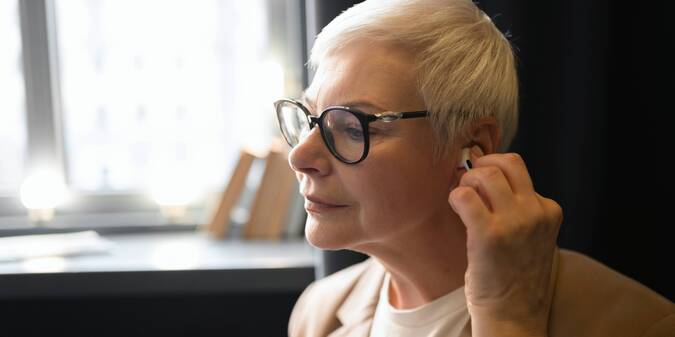
You have been enjoying the messages, and now someone suggests meeting for dinner. Before you can look forward to the date, you have questions: Will there be loud music? Will you be able to see each other clearly? What happens if you miss something and the conversation moves on?
For silver dating, those details deserve a place in the planning. You can be curious about someone and still need a different table, written directions or a break from conversation. A little discussion beforehand gives you both more room to enjoy meeting.
Choose how to communicate before meeting

Start with the method that works for each of you. A phone call is not automatically easier than messaging, and video does not suit everyone with hearing loss.
Text may give you time to read and respond without worrying about missed words. Voice might work comfortably for you, perhaps with familiar phone features. Video can offer a view of someone’s face, although the connection and lighting need to cooperate.
Ask rather than guess:
“Would you prefer to keep messaging, have a voice call or try video before we meet?”
You can state your own preference just as simply:
“Messages work best for me when we’re making plans. I’d enjoy meeting in person once we’ve chosen somewhere comfortable.”
If you choose video, agree that switching to text is fine if the conversation becomes difficult. Keep the camera steady and faces visible. If you use automatic captions, confirm anything that looks wrong, especially names and meeting times. RNID’s guidance on accessible video conversations notes that automatic captions are not completely accurate.
You do not have to complete a call to prove that you are interested.
Explain what helps without sharing your medical history
Planning a date does not require an account of your diagnosis, hearing tests or treatment. You can describe what makes conversation comfortable and decide for yourself whether to share more.
A useful request names an action the other person can take:
- “I follow conversation more easily somewhere without background music.”
- “Could we choose seats where we can see each other’s faces?”
- “Please send the time and address in a message so I can check them.”
- “If I miss something, different wording often helps me.”
You may prefer to say that you have hearing loss. You may want to discuss only the practical details for now. Either approach leaves you in control of personal information.
The person receiving the request can respond without turning the conversation into an interview: “Thanks for telling me. Is there a place you already find comfortable?”
Avoid assuming that everyone reads lips, uses hearing aids or communicates in the same way. RNID’s communication guidance emphasizes asking about individual preferences, making faces visible and being willing to try another method.
If you have dated someone with hearing loss before, that experience can help you ask thoughtful questions. It does not tell you what this person needs.
Check the venue before agreeing on the date
“Let’s find a quiet café” sounds promising, but the label tells you little about the actual setting. A small café may have a loud coffee grinder. A restaurant that feels calm at lunchtime may play music later.
Contact the venue about the time you intend to visit. Email or message if that suits you, or ask your date to make the inquiry. Thoughtful first date etiquette after 50 includes asking what makes conversation comfortable for both people.
Use this checklist:
- Is background music playing at that time? Are there tables away from speakers?
- Is there enough light to see faces clearly?
- Can you sit facing each other without a bright window directly behind either person?
- Are there seats away from the kitchen, bar and main walkway?
- Is live entertainment or a group event scheduled?
- Could you move to another table if the first one does not work?
A specific inquiry gives staff more to answer than “Is it quiet?”
“We’re planning to visit Tuesday at 3 p.m. for a conversation. Could we reserve a well-lit table away from music and kitchen noise?”
Check outdoor seating too. Traffic or wind may make a terrace less comfortable than expected.
Reducing background noise and choosing a position with a clear view of the speaker are established communication strategies. Venue checks apply those principles to your date; they cannot guarantee that the room will stay unchanged.
Keep the first meeting manageable. Coffee gives you an opportunity to talk without committing to an entire evening. You can always decide together to stay longer.
Agree on what to do when something is missed
You do not need to nod along when you have missed a question. It is reasonable to pause and ask.
Be specific when you can:
“I heard the part about your trip. Which town did you visit?”
If repeating the sentence does not help, try: “Could you put that another way?”
For a name or address, ask the person to write it down. The National Institute on Deafness and Other Communication Disorders includes writing and smartphone text tools among its suggested alternatives when speech is difficult to understand.
The other person can help by getting your attention before speaking and facing you. Speak clearly at a natural pace, without shouting or exaggerating mouth movements. Pause eating before continuing a sentence if a clear view of the mouth helps.
A missed question is not dependable evidence of boredom or lack of interest. Check what happened before interpreting the response:
“Did you catch what I asked, or would different wording help?”
If you realize you answered something else, a brief correction is enough: “I think I missed your question. Could we go back?”
There is no need to apologize repeatedly. Both people can help keep the conversation accessible.
Build a shared plan with a simple backup
A backup works best when you agree on it before either person feels uncomfortable. You might decide to change seats first, then consider another public venue if necessary.
Use this table as a starting point, adapting it to your preferences.
On smaller screens, scroll horizontally to read every column.
| Planning detail | Agree before meeting | Backup if needed |
|---|---|---|
| Communication | Choose text, voice or video according to both people’s preferences. | Switch methods rather than struggling through. |
| Meeting details | Confirm the address and time in writing. | Send a written update if anything changes. |
| Seating | Request a table with suitable lighting and clear views of faces. | Ask to change seats or move tables. |
| Missed words | Agree that repetition, different wording or written text is welcome. | Pause and clarify before continuing. |
| Background noise | Check music and likely activity with the venue. | Move to a quieter area or another agreed public setting. |
| Comfort | Choose an initial meeting length that feels manageable. | Take a break, finish earlier or plan another date. |
You might send: “If the café is louder than expected, shall we ask to move? If that doesn’t help, we can try the other place we discussed.”
Changing the setting does not mean the date has failed. It gives you a chance to discover whether conversation feels better elsewhere.
Afterward, separate your feelings about the person from your experience of the room. You might have enjoyed their company while finding the setting difficult. That is useful information for planning a second meeting.
Plan a date you can look forward to
Create your SilverSingles profile and start a conversation at a pace that suits you. When you are ready to meet, share one practical preference and choose the venue together. Give yourselves a comfortable way to talk, with permission to change the plan.