
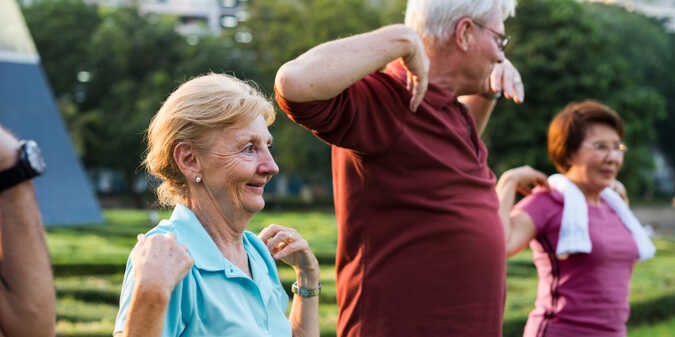
The benefits of living a healthy lifestyle are hard to ignore, and as we know, a healthy body and mind often go hand in hand. Staying active can support your physical health, mood and independence, and it can add a social side to your week too. But how do you go about keeping yourself in good shape as you get older? Here, SilverSingles takes a closer look at exercise for seniors, from the health benefits to simple ways to get moving without making fitness complicated.
Why Is Exercise Important for Seniors?
The health benefits of exercise for seniors are well established. But what exactly does regular physical activity do for you? According to the Centers for Disease Control and Prevention, exercise can support both physical and mental health as we age.
Benefits of Exercise for Seniors
There are numerous benefits associated with staying active. Here are some of the most important ones.
• Mood and mental health: Regular physical activity can improve sleep quality, reduce feelings of anxiety and support mental wellbeing. It can also be a good reason to get outside, change your surroundings and add something enjoyable to your day.
• Reduces the risk of disease: Regular exercise can lower the risk of heart disease, stroke and type 2 diabetes. It also supports bone health and can help reduce the risk of falls as you get older.
• Increases stability and strength: The right exercises can improve strength, balance and flexibility. These are useful not only during a workout but also when climbing stairs, carrying groceries, getting out of a chair or doing jobs around the house.
• Social connections: Getting out to exercise can also create opportunities to socialize and make new friends. Walking groups, gyms, swimming classes and other group activities put you around people with similar interests on a regular basis.
• Brain health: Physical activity is good for your brain as well as your body. Regular exercise can support memory and thinking skills and is associated with a lower risk of cognitive decline and dementia.
Together with nutritious food, enough rest and positive relationships, regular physical activity can support quality of life, independence and overall wellbeing as you get older.
What Exercises Are Good for Seniors?
When it comes to exercise for seniors, there are different activities to choose from depending on your health, mobility, interests and current fitness level. A combination of aerobic exercise, strength training and activities that work on balance is a useful place to start.
For adults aged 65 and older, the CDC recommends at least 150 minutes of moderate-intensity aerobic activity each week, or 75 minutes of vigorous activity, or an equivalent combination of the two. It also recommends muscle-strengthening activities on at least two days a week, along with activities that improve balance.
If 150 minutes sounds like a lot at first, do not let the number stop you. Some activity is better than none, and you can build up gradually according to your abilities and health.
Before starting a new exercise program, particularly if you have a health condition, injury or concerns about balance, speak with your doctor or another qualified health professional. Listen to your body too. If an exercise causes pain or makes you feel unwell, stop and seek professional advice.
Start slowly, allow time to recover and build up as you become stronger. Now, here are a few ways to get moving.
Strength Exercises for Seniors
Building muscle strength can make many everyday activities easier. The following simple exercises are similar to examples included in Healthline's senior workout guide and can be done at home with little or no equipment.
• Abdominal contractions: While sitting or lying comfortably, tighten your abdominal muscles, hold briefly and then relax. Keep breathing normally while you do the exercise.
• Wall push-ups: Stand facing a wall with your hands placed against it at about shoulder height. Keeping your body in a straight line, slowly bend your elbows to move toward the wall and then push yourself back. Start with a small number of repetitions and increase gradually.
• Shoulder squeeze: Sitting or standing upright, gently pull your shoulder blades toward each other, hold briefly and then release. Repeat several times without forcing the movement.
• Back leg raises: Using a sturdy chair for support, slowly lift one leg behind you while keeping it fairly straight. Lower it again before changing legs. Avoid leaning too far forward.
• Side leg raises: Hold the back of a sturdy chair and slowly raise one leg out to the side. Return it to the starting position before repeating on the other side.
• Sit-to-stand: Sit toward the front of a sturdy chair with your feet flat on the floor. Stand up slowly and then lower yourself back into the chair with control. Keep the chair or another stable surface nearby if you need additional support.
Senior Workout Routines: Cardio
Cardio exercise raises your heart rate and is an important part of staying active at any age. As you get older, activities such as walking, swimming or water aerobics can provide a lower-impact way to exercise.
Choose activities you genuinely enjoy. You are far more likely to continue exercising if you look forward to doing it. Here are a few options.
Water aerobics: A water aerobics class provides a cardio workout without the same impact on your joints as many land-based exercises. It also has a social side, since you see the same people regularly. Group activities like this can be a natural way to meet new people while doing something good for your health.
Join a tennis club: Tennis combines movement with a social activity. Depending on your fitness and mobility, you could also look at doubles tennis or other racquet sports that involve less court coverage. Joining a club can help you build social connections while staying active.
Go for a walk: Walking costs very little and can be adapted to your current fitness level. Start with a short walk around your neighborhood, a local park or an indoor shopping center if the weather is poor. A supportive pair of shoes can make a big difference. If you have a dog, regular walks also come with built-in companionship.
Take a dance class: Ballroom, line dancing and other dance classes combine movement, coordination and a chance to meet people. You are exercising without spending the whole time thinking about exercise.
Go swimming: Swimming provides a full-body workout without putting the same impact on your joints as activities such as running. You can swim laps, join an aqua class or simply spend some time moving in the pool at a level that suits you.
Improve Balance and Flexibility
Balance and flexibility are also important parts of an exercise plan as you get older. According to the CDC, activities that improve balance should be included alongside aerobic and muscle-strengthening exercise. Here are a few simple options.
Toe lifts: Stand behind a sturdy chair if you need support. Slowly rise onto your toes, pause briefly and lower your heels again. Keep your movements controlled.
Shoulder rolls: Sitting or standing, slowly roll your shoulders up, back and down. Reverse the direction after several repetitions. Avoid forcing the movement.
Neck stretch: Sit or stand comfortably with your shoulders relaxed. Slowly turn your head to one side until you feel a gentle stretch, hold briefly and then return to the center before repeating on the other side. Never push a stretch to the point of pain.
March in place: Stand near a sturdy chair or counter if you need support. Slowly lift one foot and then the other as if marching. Start at a height and pace that feels manageable.
Join a yoga class: Yoga can work on strength, flexibility and balance at the same time. If you are new to yoga, a class with an instructor who understands older adults or beginners can help you learn the movements safely.
Try tai chi: Tai chi combines slow movement, balance and coordination. It is another option for people who prefer gentle exercise without high-impact movements.
Yoga and tai chi are examples of activities that can work on more than one area of fitness at the same time, including strength, flexibility and balance.
Remember to start slowly and stop if something hurts or feels wrong. If you need to use a chair for support, use one. If you need a longer break between exercises, take it. The aim is to stay active without turning exercise into something stressful or painful.
Exercise for Seniors: YouTube Guide
If you prefer exercising at home, online workout videos are another option. There are many programs aimed at older adults, including short workouts and seated routines that require little equipment.
For example, HASfit offers low-impact senior workouts, including shorter sessions, while its seated chair workout provides an option for people who prefer exercising from a chair.
Grow Young Fitness also publishes exercise videos aimed at older adults, including stretching and gentle movement routines.
These are only examples. Before following an online workout, check that the instructor's movements suit your ability and stop if an exercise causes pain, dizziness or unusual discomfort.
There is no single formula for exercising as you get older. You could walk outdoors, join a gym, work with a trainer, sign up for a class or follow an online workout at home. Gardening, carrying groceries and other everyday movement count too, so staying active does not always require a formal workout.
The best plan is one you are willing and able to keep doing. Start with activities you enjoy, add variety where you can and increase the amount gradually. Regular movement can support your physical health, mood, independence and ability to keep doing the things you enjoy.
There can be a social benefit too. A morning walking group, dance class or weekly swim puts you around people regularly, while feeling fitter can open up more ideas for spending time together, from walking around a new town to trying a more active date.
Feeling good and interested in meeting someone new? Register with SilverSingles and start connecting with other singles online.